While traveling on a local bus in Pakistan, I overheard a woman, aged between forty and fifty, speaking to a younger girl. She said:
“In the ancient Stone Age, women were not inferior to men. They hunted together with men, gathered food together, and raised children together. Every activity was shared equally. But in our Pakistan, in the name of religion, women are often treated as the lowest of the low. Even among Muslims here, some women are not oppressed, but many are targeted under societal or religious pretexts.”
Hearing this shocked me deeply. I wondered which religion she was referring to, as she is from Pakistan, where Islam is the majority religion. I struggled with whether to approach her and clarify that religions do not inherently degrade women, but time, societal changes, and human behavior often do. I didn’t gather the courage to speak to her, but I reflected deeply on her words.
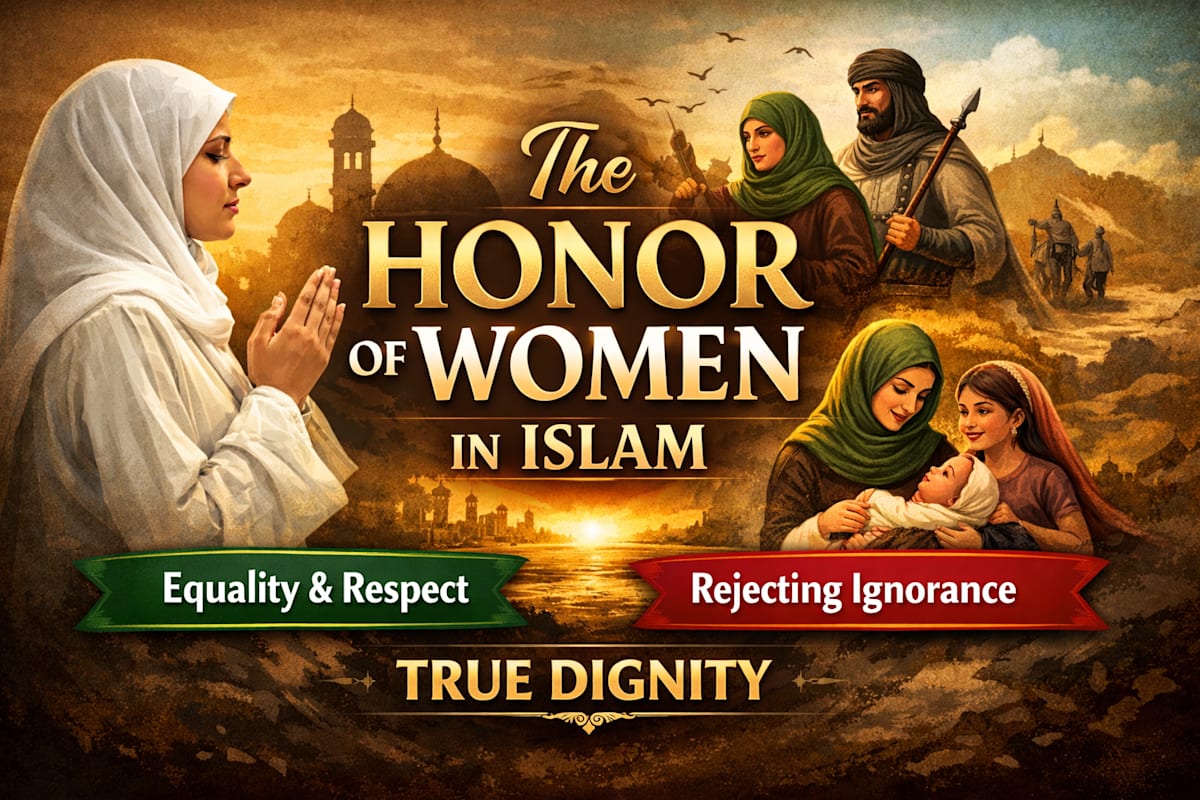
From an Islamic perspective, women are not inferior to men. Islam has always given women rights and dignity, though cultural practices and societal changes sometimes distort this reality. For example, some people today claim that veiling makes women inferior. In reality, Islam prescribes veiling as a form of protection and respect, emphasizing the value of women rather than diminishing them. Just as we cover precious things to protect them, veiling is a means of safeguarding dignity.
Regarding women participating in activities like hunting, Islam does not forbid it. A woman can hunt, work, or engage in any activity alongside men if she has the strength, patience, and determination. The challenges of modern life may make this difficult, but it is not religiously prohibited.
Historically, during the age of Jahiliyyah (pre-Islamic Arabia), women were often treated brutally—daughters were sometimes killed at birth because they were considered dishonorable. Islam abolished such practices and honored women, declaring them a source of blessing and valuing their role in society. A man whose first child is a daughter is considered fortunate, according to Islamic teachings.
Islam brought significant reforms, educating people and restoring human dignity. It ensured that women were not burdened with financial responsibilities unnecessarily, and it recognized their importance in family and society. Muslim women today should value these teachings and understand that following Islamic guidance ensures success in this life and the hereafter.
The Quran and Hadith consistently emphasize the equal worth of men and women, while recognizing the differences in their roles. Women are given a special status, particularly as mothers, and entrusted with shaping future generations. One wrong influence or misguided idea about “freedom” can negatively affect not just an individual, but society as a whole.
In Islam, both men and women have equal rights, but neither has authority to dominate the other unjustly. Sisters are urged to understand their responsibilities, follow the teachings of Islam, and avoid being misled by harmful ideologies. Living according to Islamic principles ensures dignity, peace, and success in this life and the hereafter.